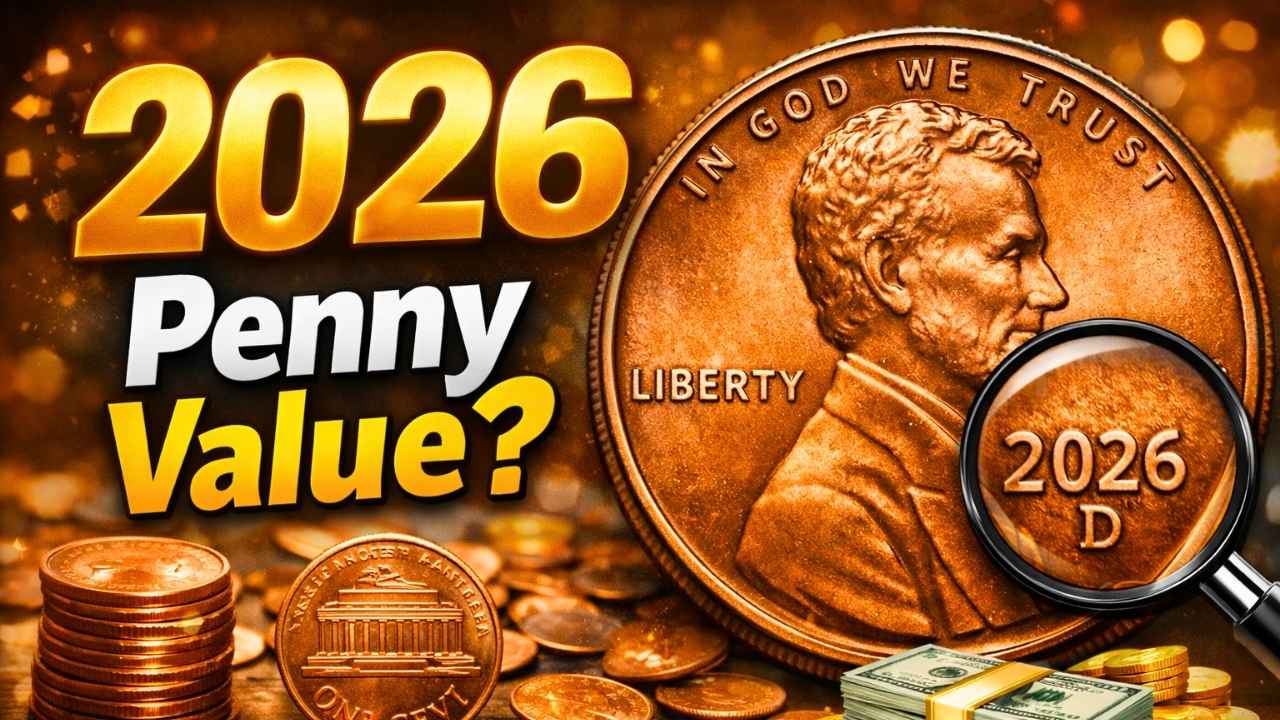
2026 Penny Value: The Lincoln Penny continues to be one of the most collected coins in American numismatics. With more than a century of history behind it, each new year’s issue adds another chapter to the story. The 2026 penny, featuring the familiar shield reverse introduced in 2010, is already attracting attention among collectors who track modern coinage for varieties, mint errors, and long-term investment potential. This guide explores the value trends, collector insights, and future outlook for the 2026 penny.
The Design of the 2026 Penny
The obverse of the coin retains Victor David Brenner’s portrait of Abraham Lincoln, first introduced in 1909. The reverse continues with the Union shield design, symbolizing Lincoln’s role in preserving the nation. While the design has remained consistent since 2010, collectors pay close attention to subtle differences in strike quality, mint marks, and proof finishes that distinguish each year’s issue.

Mint Locations and Varieties
The 2026 penny is expected to be struck at three primary mints: Philadelphia, Denver, and San Francisco. Coins from Philadelphia carry no mint mark, Denver issues bear a “D,” and San Francisco produces proof coins with an “S.” Collectors often seek complete sets from all three mints, with proof coins being especially desirable for their sharp details and mirror-like finish.
Circulation Strikes
Most 2026 pennies will enter circulation, making them common and easily obtainable. In circulated condition, they are generally worth face value. However, uncirculated examples with strong luster and minimal marks can attract collector interest. Coins graded MS65 or higher often sell for modest premiums, especially when preserved in rolls or mint sets.

Proof Issues
Proof pennies from the San Francisco Mint are struck with polished dies and planchets, resulting in exceptional detail and finish. These coins are sold directly to collectors in proof sets and are not intended for circulation. High-grade proof coins, particularly those graded PR69 or PR70, can command higher prices in the marketplace. Collectors value them for their artistry and rarity compared to circulation strikes.
Mint Errors and Varieties
One of the most exciting aspects of modern coin collecting is the discovery of mint errors and varieties. Double dies, off-center strikes, and other anomalies can transform an ordinary penny into a valuable collectible. While it is too early to know which errors may emerge from the 2026 issue, collectors will be watching closely. Past years have produced notable varieties that continue to attract strong demand.

Market Trends for Modern Pennies
Over the past decade, modern pennies have shown steady interest among collectors. While most circulation strikes remain common, proof issues and mint errors have appreciated in value. Online marketplaces and auction platforms have made it easier for collectors to buy and sell coins, expanding the reach of modern numismatics. The 2026 penny is expected to follow similar trends, with rare varieties and high-grade examples commanding premiums.
Collecting Strategies
Collectors approach modern pennies in different ways. Some aim to build complete date-and-mintmark sets, while others focus on proof issues or error coins. Beginners often start with circulation strikes, which are affordable and widely available, while advanced collectors pursue high-grade proofs and rare varieties. Regardless of strategy, patience and research are essential for success.

Investment Potential
While most 2026 pennies will remain common, certain varieties and high-grade examples may appreciate over time. Proof coins and mint errors offer the strongest investment potential, as they combine rarity with collector demand. However, investing in coins requires knowledge of grading, authenticity, and market trends. For many collectors, the joy of ownership and connection to history outweighs financial considerations.
The Future Outlook
The Lincoln Penny has endured for more than a century, and its popularity shows no signs of fading. As younger generations discover coin collecting, modern issues like the 2026 penny will serve as accessible entry points. Meanwhile, rare varieties and high-grade proofs will continue to attract serious collectors and investors. The future of the 2026 penny looks promising, both as a collectible and as part of the broader Lincoln series.
Conclusion
The 2026 penny is more than just pocket change. It is a continuation of a tradition that began in 1909, honoring Abraham Lincoln and symbolizing the nation’s resilience. While most examples will remain common, proof issues, mint errors, and high-grade coins offer exciting opportunities for collectors. Understanding value trends, mint varieties, and market demand ensures that collectors can make informed decisions. Whether pursued for passion or profit, the 2026 penny represents both history and potential, making it a worthy addition to any collection.