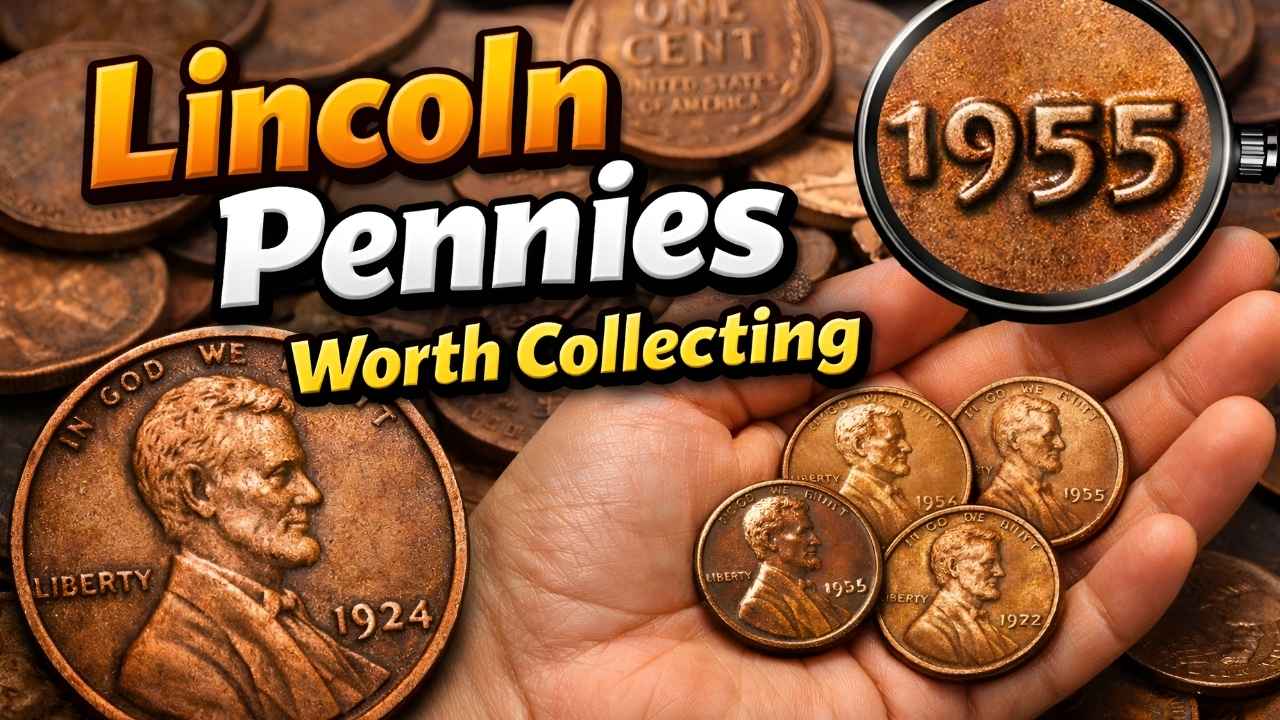
Lincoln Pennies Worth Collecting: The Lincoln penny has been a part of American life since 1909, when it was first introduced to honor the 100th anniversary of Abraham Lincoln’s birth. Over the decades, billions of these coins have been minted, yet a small fraction stand out as rare treasures. Collectors and everyday people alike are fascinated by the idea that a coin worth just one cent could actually be valued at hundreds or even thousands of dollars. What makes these pennies so special is a mix of history, minting errors, and scarcity. Some of them are still in circulation today, waiting to be discovered in pocket change.
Why Some Pennies Are Worth Collecting
Not every Lincoln penny is valuable, but certain factors can elevate a coin’s worth. Low mintage years, minting mistakes, and unique design variations are the main reasons a penny becomes collectible. Condition also plays a huge role. A coin in pristine, uncirculated condition can be worth far more than one that has been worn down by decades of use. For collectors, the thrill lies in spotting these rare coins in everyday transactions or rolls of pennies from the bank.
1909 S VDB Lincoln Penny
The 1909 S VDB penny is one of the most famous coins in American numismatics. It was the very first year of the Lincoln cent, and only 484,000 were minted in San Francisco with the designer Victor David Brenner’s initials, VDB, on the reverse. Public criticism led to the initials being removed, making this coin extremely rare. Finding one in circulation today is unlikely, but it remains a legendary piece that collectors dream of owning.
1914 D Lincoln Penny
The 1914 D penny from the Denver Mint is another key rarity. With only about 1.2 million produced, it is scarce compared to other years. Many of these coins were heavily circulated, so high-grade examples are especially valuable. Spotting one in change would be a remarkable discovery.
1922 No D Lincoln Penny
In 1922, pennies were only struck at the Denver Mint. A minting error caused some coins to be produced without the “D” mint mark. These “No D” pennies are highly sought after because they represent a true anomaly in the series. Collectors prize them, and even worn examples can command significant value.
1931 S Lincoln Penny
The 1931 S penny had a very low mintage of just 866,000 coins. While not as famous as the 1909 S VDB, it is still considered a semi-key date in the Lincoln series. Many were saved by collectors at the time, but finding one in circulation today would be a rare event.
1943 Steel Lincoln Penny
During World War II, copper was needed for ammunition, so the Mint produced pennies from zinc-coated steel in 1943. These coins stand out because of their silver-gray color. While most are common, some rare varieties exist, such as the 1943 copper penny accidentally struck from leftover copper planchets. Those are worth a fortune, but even the steel versions are interesting finds.
1955 Doubled Die Lincoln Penny
The 1955 doubled die penny is one of the most famous error coins in American history. The doubling is most noticeable in the date and lettering, making it easy to spot. Thousands were released into circulation, and collectors still search for them today. Even worn examples can be worth hundreds of dollars.

1969 S Doubled Die Lincoln Penny
Another doubled die rarity is the 1969 S penny. The doubling on the obverse is dramatic, especially in the word “LIBERTY” and the date. Counterfeits exist, so authentication is important, but genuine examples are highly valuable. This coin is one of the most exciting modern rarities.
1972 Doubled Die Lincoln Penny
The 1972 doubled die penny is more common than the 1955 or 1969 S varieties, but it is still a prized collectible. The doubling is visible in the date and inscriptions, and thousands were released into circulation. Collectors enjoy searching rolls of pennies for this variety.
1982 Small Date Copper Lincoln Penny
In 1982, the Mint transitioned from copper to copper-plated zinc pennies. During this change, both large date and small date varieties were produced in copper and zinc. The 1982 small date copper penny is rare and valuable, especially in high grades. Spotting one requires careful examination of the date style and coin composition.
1992 Close AM Lincoln Penny
The 1992 Close AM penny is a modern rarity. On most pennies from that year, the letters “A” and “M” in “AMERICA” are spaced apart. On the rare Close AM variety, the letters are nearly touching. These coins were not intended for circulation, but a small number escaped from the Mint. They are worth thousands of dollars today.
1999 Wide AM Lincoln Penny
The 1999 Wide AM penny is the opposite of the 1992 Close AM. On most pennies from 1999, the “A” and “M” in “AMERICA” are close together. On the rare Wide AM variety, the letters are spaced apart. This error occurred because proof dies were mistakenly used for circulation coins. Collectors eagerly search for this variety in pocket change.
The Thrill of the Hunt
What makes collecting Lincoln pennies so exciting is the possibility of finding a rare coin in everyday life. While the odds are slim, stories of people discovering valuable pennies in circulation continue to inspire collectors. Searching through rolls of coins from the bank or examining pocket change carefully can yield surprising results. Even if you never find a 1909 S VDB or a 1955 doubled die, the process of looking connects you to history and the artistry of coinage.

Final Thoughts
Lincoln pennies are more than just small pieces of metal. They are miniature works of art, historical artifacts, and potential treasures. The twelve coins highlighted here represent some of the most fascinating rarities in the series. Whether you are a seasoned collector or someone who simply enjoys the idea of hidden value in everyday life, Lincoln pennies offer endless opportunities for discovery. The next time you receive change, take a closer look. You might just be holding a coin worth far more than one cent.