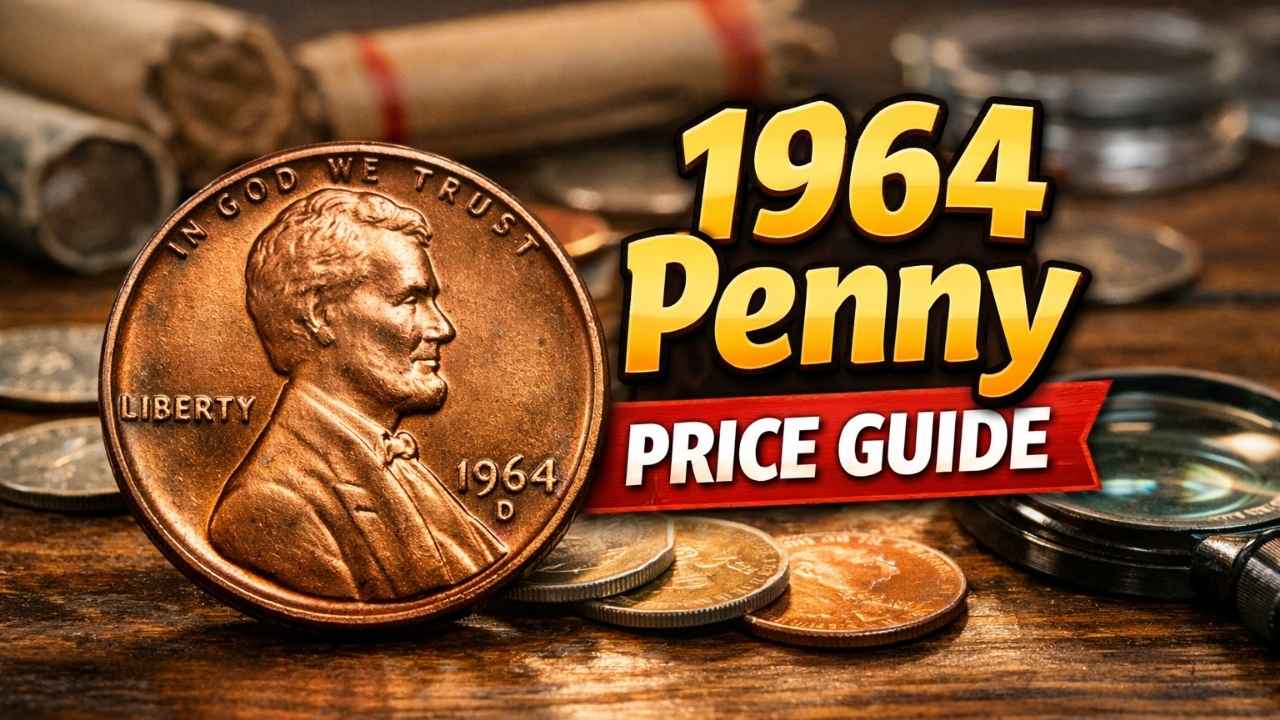
1964 Penny Price Guide: The 1964 penny may seem like an ordinary coin, but in 2026 collectors and enthusiasts are discovering that this common piece of change can sometimes bring surprising profits. While millions were minted, certain varieties, conditions, and errors make some 1964 pennies far more valuable than their face value. This guide explores the history, rarity, and potential worth of the 1964 penny, showing how a simple coin can turn into a hidden treasure.
The History of the 1964 Penny
The 1964 penny belongs to the Lincoln cent series, which began in 1909 to honor President Abraham Lincoln’s 100th birthday. Designed by Victor David Brenner, the coin features Lincoln’s portrait on the obverse and the Lincoln Memorial on the reverse, a design introduced in 1959. By 1964, the United States Mint was producing billions of pennies annually, making them one of the most common coins in circulation. Despite this, certain factors make some 1964 pennies stand out.

Why the 1964 Penny Is Valuable
Most 1964 pennies are worth only their face value, but collectors prize specific examples for their rarity and condition. Coins with sharp details, original luster, and no signs of wear can command higher prices. Error coins, such as doubled dies or off-center strikes, are especially valuable. Mint marks also play a role, with coins from Denver and Philadelphia offering different levels of scarcity. The combination of these factors determines whether a 1964 penny is worth a few cents or hundreds of dollars.
Mint Marks and Their Importance
The 1964 penny was struck at two mints: Philadelphia and Denver. Philadelphia coins carry no mint mark, while Denver coins are marked with a small D beneath the date. Although both mints produced large quantities, collectors often seek out high-grade examples from each location. Mint marks help identify the origin of a coin and can influence its rarity and value.

The Role of Condition in Value
Condition is one of the most important factors in determining the value of a 1964 penny. Coins are graded on a scale from Poor to Mint State, with higher grades commanding higher prices. A circulated penny may only be worth a few cents, while an uncirculated example with full red luster can sell for several dollars or more. Professional grading services provide certification that adds credibility and often increases the value of a coin.
Error Varieties That Bring Big Profits
Error coins are among the most exciting finds for collectors. In 1964, several varieties of errors were produced, including doubled dies, off-center strikes, and repunched mint marks. These mistakes occurred during the minting process and created unique coins that are highly sought after today. A 1964 doubled die penny, for example, can sell for hundreds of dollars depending on its condition. Collectors prize these coins for their rarity and distinct appearance.
Full Red Pennies and Collector Demand
One of the most significant features collectors look for in Lincoln cents is color designation. Coins are often described as brown, red-brown, or full red, depending on the amount of original mint luster that remains. Full red pennies are much rarer than those that have toned over time. In 2026, full red 1964 pennies continue to attract strong demand, with collectors willing to pay substantial premiums for these well-preserved examples.
Auction Stories and Surprising Discoveries
The 1964 penny has been at the center of several surprising discoveries. Families cleaning out old collections or searching through change jars have stumbled upon coins worth far more than expected. Auction houses have reported bidding wars over high-grade examples and rare error varieties. These stories highlight the enduring appeal of coin collecting and the potential profits hidden in everyday life.

How to Identify a Valuable 1964 Penny
Identifying a valuable 1964 penny requires careful examination. Start by checking the mint mark to determine where the coin was produced. Next, assess the condition by looking for sharp details, original luster, and minimal wear. Pay special attention to potential errors, such as doubled dies or off-center strikes. Coins with professional certification are easier to sell and often command higher prices. Even common examples can be worth more if they are well preserved.
Collecting Lincoln Cents Today
Collecting Lincoln cents remains a rewarding hobby in 2026. The series offers a mix of affordable coins for beginners and rare varieties for advanced collectors. Building a complete set can be challenging, but the pursuit is part of the enjoyment. Many collectors appreciate the historical connection and artistic beauty of these coins, making them a timeless addition to any collection.
Investment Potential of the 1964 Penny
Beyond hobbyist interest, the 1964 penny also holds investment potential. Rare coins have historically appreciated in value, and demand for iconic pieces like the Lincoln cent remains strong. Investors often focus on high-grade examples and error varieties, which are more likely to increase in value over time. While coin collecting should primarily be enjoyed as a passion, the financial rewards can be significant.
Tips for Beginners
For those new to collecting Lincoln cents, start by learning about the series and familiarizing yourself with key dates and varieties. Purchase a coin guide or reference book to help identify valuable pieces. Begin with affordable coins in lower grades, then gradually expand to rarer examples. Always buy from reputable dealers and consider professional grading for high-value coins. Patience and knowledge are key to building a successful collection.
Preserving Your Collection
Proper preservation is essential to maintaining the value of Lincoln cents. Store coins in protective holders to prevent damage. Avoid cleaning coins, as this can reduce their value. Keep your collection in a cool, dry environment to prevent tarnishing. With proper care, Lincoln cents can be enjoyed for generations and passed down as treasured heirlooms.
The Legacy of the Lincoln Cent
The Lincoln cent remains a symbol of American heritage and artistry. Its design honors one of the nation’s greatest leaders, while its history reflects the evolution of American coinage. More than sixty years after its minting, the 1964 penny continues to inspire collectors and historians alike. In 2026, it is not just a piece of currency but a treasured artifact of American culture.

Conclusion
The 1964 penny price guide for 2026 shows that this coin is more than just pocket change. It represents history, artistry, and the thrill of discovery. Rare varieties and high-grade examples can be worth hundreds of dollars, making them a fascinating pursuit for collectors and investors. Whether found in a change jar or purchased at auction, the 1964 penny continues to bring big profits and captivate those who seek it.