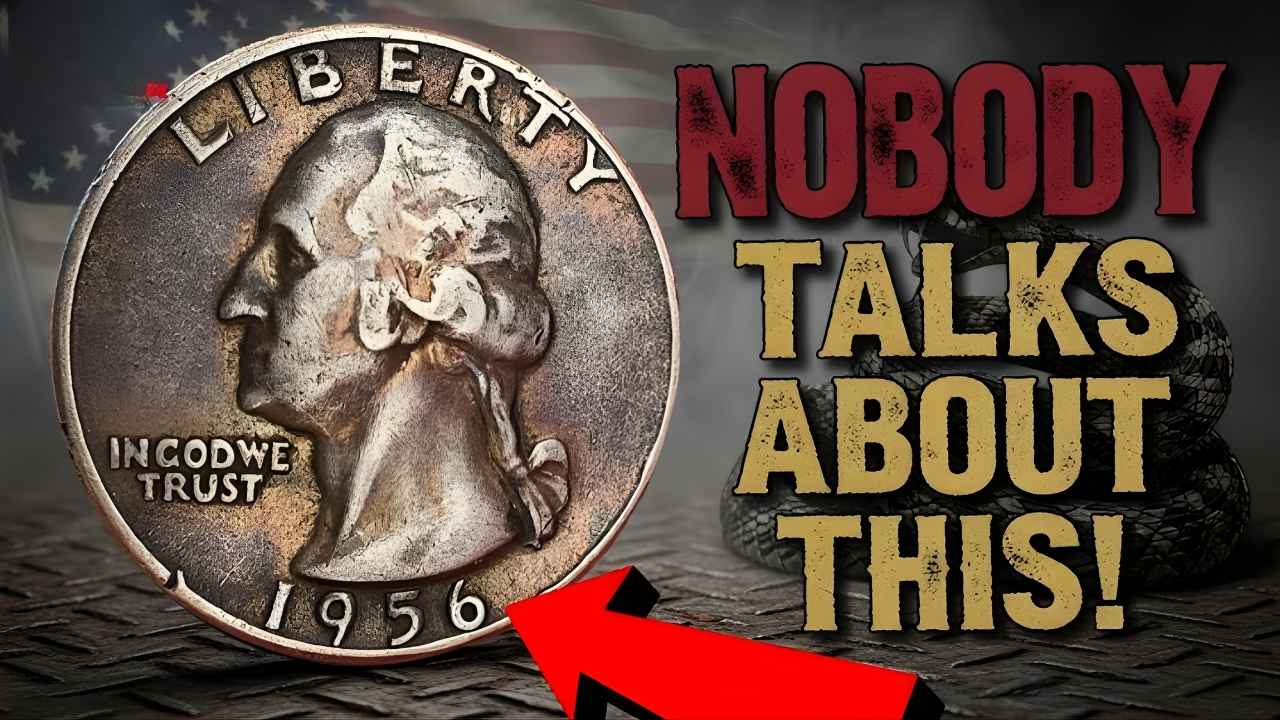
1950s Quarters Ending in 6 Worth a Silent Fortune: The Washington quarter has been a cornerstone of American coinage since 1932. By the 1950s, it had become a familiar sight in everyday transactions. Struck in 90 percent silver and 10 percent copper, these coins carried both monetary and intrinsic value. While most quarters from this era are worth only a modest premium today, certain dates and varieties have become hidden treasures. Among them, quarters from the 1950s ending in the number 6 hold a special place, quietly commanding impressive sums in the world of numismatics.
Why Quarters Ending in 6 Stand Out
Collectors often focus on specific dates that carry unique stories or minting quirks. In the 1950s, quarters minted in 1956 and 1956 proof sets, as well as the 1956 Denver issues, have drawn attention for their scarcity in high grades. Similarly, the 1951 and 1956 proof quarters are notable for their exceptional strike quality and limited production. These coins, when preserved in pristine condition, can be worth far more than their silver content. The fascination with coins ending in 6 lies in their combination of rarity, condition sensitivity, and collector demand.
The 1956 Proof Quarter
The 1956 proof quarter is one of the most celebrated coins of the decade. Produced at the Philadelphia Mint, proof coins were struck with special dies and polished planchets to create mirror-like surfaces. Only a limited number of proof sets were made, and today, high-grade examples are highly sought after. A flawless 1956 proof quarter with deep cameo contrast can sell for hundreds or even thousands. Collectors prize these coins not only for their beauty but also for their scarcity.
The 1956 Denver Mint Quarter
The Denver Mint produced millions of quarters in 1956, but finding one in exceptional condition is rare. Circulation quickly wore down the details, and many coins were melted for their silver content in later decades. Today, a 1956 Denver quarter graded Mint State 67 or higher can be worth a small fortune. The sharpness of the strike, the luster of the silver, and the absence of blemishes all contribute to its value. For collectors, the thrill lies in discovering such a coin among ordinary pocket change.
The Role of Silver Content
All Washington quarters minted before 1965 contain 90 percent silver. This gives them intrinsic value beyond their face value. Even worn examples are worth more than 25 cents due to their silver content. However, the true treasures are those coins preserved in pristine condition. The combination of silver and rarity makes 1950s quarters ending in 6 especially appealing to collectors and investors alike.
Mint Errors That Add Value
Minting errors are another source of hidden fortune. Quarters from the 1950s with double strikes, off-center strikes, or repunched mint marks can be worth significantly more than regular issues. For example, a 1956 quarter with a dramatic die crack or doubling on the lettering can command high prices. These errors are rare and often overlooked, making them exciting discoveries for sharp-eyed collectors.
Grading and Condition
Condition is critical in determining value. Coins are graded on a scale from Poor to Mint State 70, with higher grades commanding higher prices. A 1956 quarter in worn condition may only be worth its silver content, but one graded Mint State 67 or higher can be worth hundreds or thousands. Proof coins with perfect surfaces and strong contrast between frosted devices and mirrored fields are especially valuable. Professional grading services provide certification that gives buyers confidence and often increase the selling price.
Record Breaking Sales
Over the years, certain 1950s quarters ending in 6 have achieved impressive sales at auction. High-grade proof coins and rare mint errors have crossed the thousand-dollar mark. These record sales demonstrate the incredible value hidden in this seemingly ordinary coinage. For collectors, the possibility of discovering such a treasure adds excitement to the hobby.
How to Spot Valuable 1950s Quarters
If you want to check your own coins, start by looking at the date. Quarters from 1956 are especially noteworthy. Examine the mint mark carefully, as Denver issues can be valuable in high grades. Study the coin’s condition, looking for sharp details, bright luster, and minimal wear. Proof coins are distinguished by their mirror-like surfaces and sharp strikes. Finally, look for errors such as doubling or misaligned elements. Even minor errors can add significant value.
The Collector’s Perspective
For many collectors, 1950s quarters are more than just potential profit. They represent a piece of American history, reflecting the post-war era and the nation’s economic growth. The silver content adds intrinsic value, while the unique varieties make them fascinating to study. Holding a rare 1956 quarter is like holding a piece of the past, connecting everyday life with the world of numismatics.
Building a Collection
If you are interested in collecting 1950s quarters, start with circulation finds. Many people still have jars of old coins tucked away, and silver quarters often appear in them. From there, you can expand into proof sets, high-grade examples, and error varieties. Attending coin shows, auctions, and online marketplaces can help you discover rare pieces. Building a collection is a rewarding journey that combines history, art, and the thrill of discovery.
Final Thoughts
Quarters from the 1950s ending in 6 are among the hidden treasures of American coinage. From the 1956 proof quarter to the 1956 Denver Mint issue, these coins have captured the imagination of collectors. While most quarters are common, the rare ones remind us that silent fortunes can still be found in everyday change. For collectors, the value lies not only in the potential profit but also in the history and artistry of the coin. Whether you are searching through pocket change or bidding at auction, 1950s quarters offer a fascinating journey into America’s past and the world of numismatics.