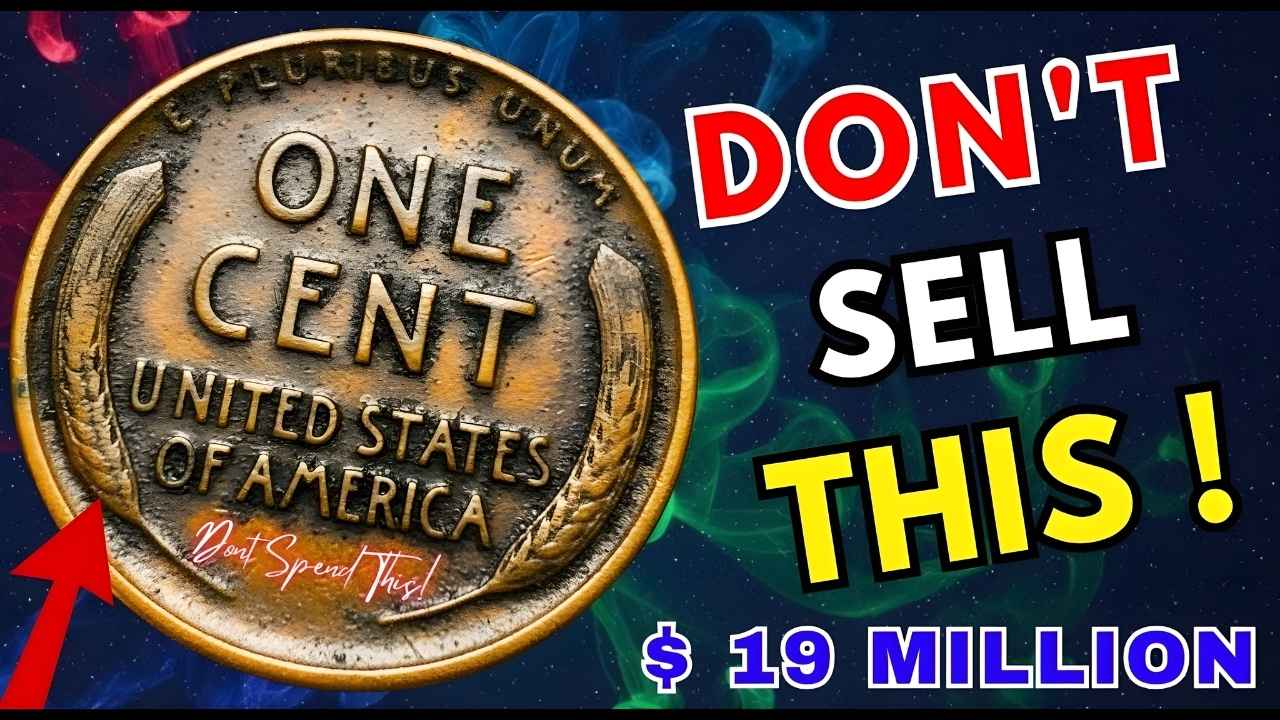
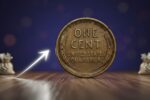
Rare Wheat Pennies Worth Millions: The Lincoln Wheat penny, first minted in 1909, is one of the most iconic coins in American history. Designed by Victor David Brenner, it features Abraham Lincoln on the obverse and two wheat stalks on the reverse. This design was used until 1958, when the reverse was changed to the Lincoln Memorial. For nearly fifty years, the Wheat penny circulated widely, becoming a familiar part of everyday life. Today, however, certain rare Wheat pennies are worth millions, making them treasures hidden in plain sight.
Why Wheat Pennies Can Be Valuable
The value of a coin depends on rarity, condition, and demand among collectors. Wheat pennies were produced in huge numbers, but some varieties are scarce due to low mintages, errors, or unique historical circumstances. When combined with pristine condition, these coins can command astonishing prices. For collectors, the thrill lies in discovering these rare gems among ordinary coins.
The Famous 1943 Copper Penny
One of the most legendary Wheat pennies is the 1943 copper penny. During World War II, the U.S. Mint switched from copper to steel to conserve resources. However, a small number of copper planchets were mistakenly used, creating an extremely rare coin. Only a handful of 1943 copper pennies are known to exist, and they have sold for hundreds of thousands to over a million dollars at auction. Finding one in circulation would be like winning the lottery.
The 1909 S VDB Penny
Another highly prized coin is the 1909 S VDB penny. When the Wheat penny was first introduced, Brenner’s initials VDB were placed prominently on the reverse. Some critics felt the initials were too large, and they were quickly removed. The San Francisco Mint produced only a limited number of coins with the VDB initials before the change, making them rare. Today, the 1909 S VDB penny is one of the most sought after coins in American numismatics, with values reaching tens of thousands of dollars depending on condition.
The 1922 No D Penny
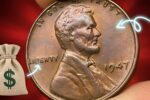
The 1922 No D penny is another rarity. That year, pennies were only struck at the Denver Mint, but some coins were produced with a weak or missing mint mark. These No D pennies are scarce and highly collectible. In high grades, they can sell for thousands of dollars. Collectors prize them as an unusual variety that adds intrigue to any collection.
The 1955 Double Die Penny
Error coins often become valuable, and the 1955 double die penny is a famous example. Due to a misalignment during the minting process, the date and lettering on some coins appear doubled. This dramatic error is easy to spot and has made the coin a favorite among collectors. Depending on condition, the 1955 double die penny can be worth thousands.
Other Rare Wheat Pennies
While the coins mentioned above are the most famous, other Wheat pennies are also valuable. Low mintage years such as 1914 D and 1931 S are scarce and command high prices. Proof coins from the early years are rare and sought after. Even common dates can be worth more if they are in exceptional condition, especially if graded Mint State by professional services.
Grading and Condition
Condition plays a critical role in determining value. A rare coin in poor condition may be worth only a fraction of its potential value. Coins are graded on a scale from Poor to Mint State 70, with higher grades commanding higher prices. Uncirculated coins with sharp details and bright luster are especially valuable. Professional grading services provide certification that gives buyers confidence and often increases the selling price.
Record Breaking Sales
Over the years, rare Wheat pennies have achieved record breaking sales. The 1943 copper penny has sold for over a million dollars. The 1909 S VDB penny and the 1955 double die penny have also brought impressive sums at auction. These sales demonstrate the incredible value hidden in this humble coin. For collectors, the possibility of discovering such a treasure adds excitement to the hobby.
How to Spot Valuable Wheat Pennies
If you want to check your own coins, start by looking at the date and mint mark. Key dates such as 1909 S VDB, 1914 D, 1922 No D, 1931 S, 1943 copper, and 1955 double die are the most valuable. Examine the coin’s condition carefully. Sharp details, no wear, and bright luster indicate higher value. If you suspect you have a rare coin, consider sending it to a professional grading service.
The Collector’s Perspective
For many collectors, Wheat pennies are more than just potential profit. They represent a piece of American history, spanning decades of change and progress. The design is simple yet elegant, and the coins carry stories of the people who used them. Holding a rare Wheat penny is like holding a piece of the past, connecting everyday life with the world of numismatics.
Building a Collection
If you are interested in collecting Wheat pennies, start with circulation finds. Many people still have jars of old pennies tucked away, and Wheat pennies often appear in them. From there, you can expand into key dates, proof coins, and error varieties. Attending coin shows, auctions, and online marketplaces can help you discover rare pieces. Building a collection is a rewarding journey that combines history, art, and the thrill of discovery.
Final Thoughts
Rare Wheat pennies are among the most valuable coins in American history. From the legendary 1943 copper penny to the 1909 S VDB and the 1955 double die, these coins have captured the imagination of collectors. While most Wheat pennies are common, the rare ones remind us that treasures can still be found in everyday change. For collectors, the value lies not only in the potential profit but also in the history and artistry of the coin. Whether you are searching through pocket change or bidding at auction, Wheat pennies offer a fascinating journey into America’s past and the world of numismatics.