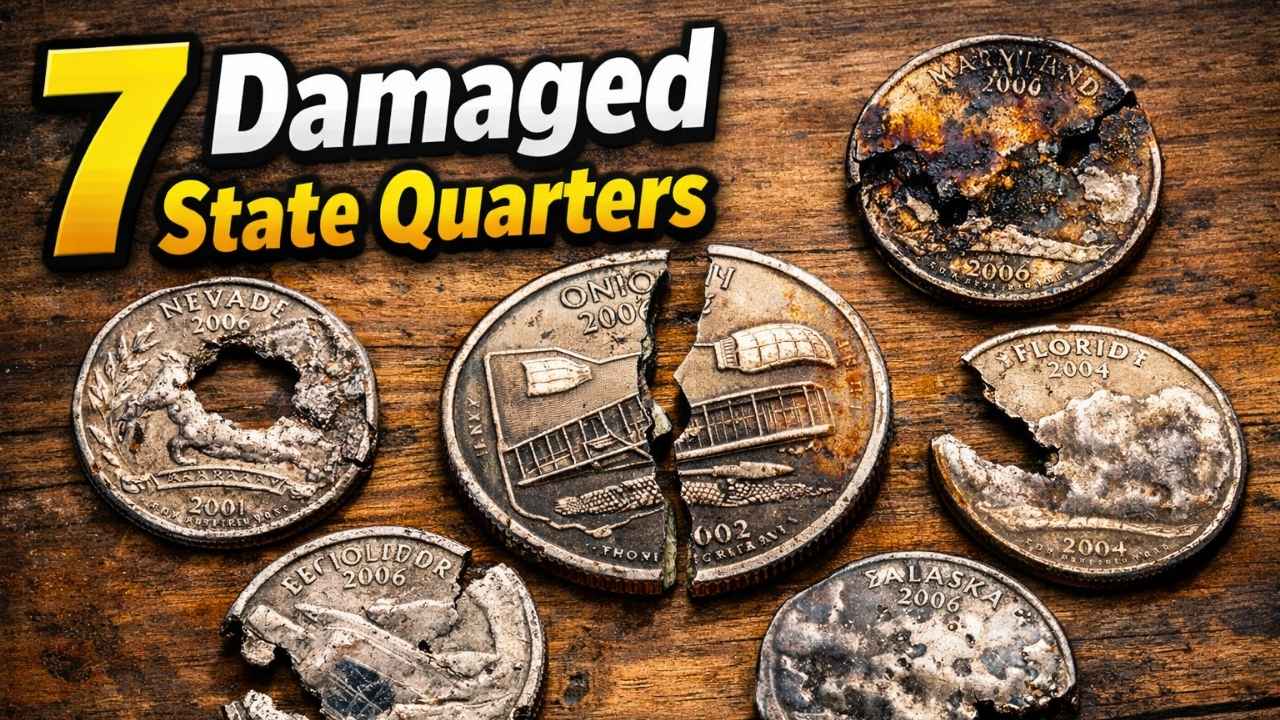
7 Damaged State Quarters: The State Quarters program, launched in 1999 and completed in 2008, remains one of the most popular coin series in American history. With fifty unique designs representing each state, millions of people began collecting these coins from circulation. While most examples are common, damaged quarters and mint errors have become a fascinating niche for collectors. Some damaged coins are simply curiosities, while others are rare mint mistakes that can command impressive premiums. This guide explores seven types of damaged State Quarters and their collector value.
Off-Center Strikes
One of the most recognizable mint errors is the off-center strike. This occurs when the coin blank is not properly aligned during striking, resulting in a design that is shifted to one side. Off-center State Quarters can range from minor misalignments to dramatic errors where large portions of the design are missing. Values depend on the degree of misalignment and whether the date is visible. Coins with extreme off-center strikes and clear dates can sell for hundreds of dollars.
Double Strikes
Double strikes happen when a coin is struck more than once by the dies, creating overlapping images. On State Quarters, this error can produce fascinating distortions of the state design. Collectors prize dramatic double strikes, especially those where both impressions are clear. Minor double strikes may only add modest value, but major examples can command significant premiums at auction.
Clipped Planchets
A clipped planchet occurs when the coin blank is improperly cut, leaving a curved or straight clip on the edge of the coin. State Quarters with clipped planchets are relatively scarce and attract collector interest. Values depend on the size and location of the clip, with larger and more dramatic clips being more valuable. Coins with both a clip and visible design details are especially desirable.

Broadstrikes
Broadstrikes occur when a coin is struck without the retaining collar, causing the design to spread outward and the coin to appear larger than normal. State Quarters with broadstrikes are unusual and visually striking. Collectors enjoy these errors for their distinctive appearance. Values vary depending on condition and the extent of the broadstrike, but they generally sell for more than face value.
Die Cracks and Cuds
Die cracks and cuds are errors caused by damage to the dies used to strike coins. A die crack appears as a raised line on the coin, while a cud is a raised blob where part of the die has broken away. State Quarters with dramatic die cracks or large cuds are popular among error collectors. While minor cracks may add little value, major cuds can make a coin worth several times its face value.
Wrong Planchet Errors
Occasionally, a coin is struck on the wrong planchet, meaning the blank intended for another denomination is used. State Quarters struck on nickel or dime planchets are extremely rare and highly valuable. These coins are often lighter or smaller than normal quarters, making them easy to spot. Wrong planchet errors can sell for hundreds or even thousands of dollars depending on rarity and condition.
Damaged Circulation Examples
Not all damaged State Quarters are mint errors. Many coins show damage from circulation, such as scratches, bends, or environmental wear. While these coins are interesting, they generally do not carry significant collector value. However, some collectors enjoy keeping unusual damaged examples as curiosities. Their value is typically limited to face value unless the damage creates a visually striking or unique appearance.
Collecting Damaged State Quarters
Collectors approach damaged State Quarters in different ways. Some focus exclusively on mint errors, building specialized collections of off-center strikes, double strikes, and wrong planchets. Others enjoy keeping damaged circulation coins as conversation pieces. Regardless of approach, knowledge is essential. Understanding the difference between genuine mint errors and post-mint damage ensures that collectors make informed decisions.
Market Trends
The market for damaged and error coins has grown steadily over the past two decades. Online marketplaces and auction platforms have made it easier for collectors to buy and sell these coins, expanding the reach of error collecting. Dramatic errors continue to command strong prices, while minor errors remain affordable entry points for beginners. As interest in numismatics grows, damaged State Quarters are likely to remain popular.

Conclusion
Damaged State Quarters offer a fascinating glimpse into both the minting process and the quirks of circulation. From off-center strikes to wrong planchet errors, these coins capture the imagination of collectors and highlight the unpredictability of coin production. While not all damaged coins are valuable, genuine mint errors can command impressive premiums. For collectors, damaged State Quarters represent both history and rarity, making them a rewarding addition to any collection.