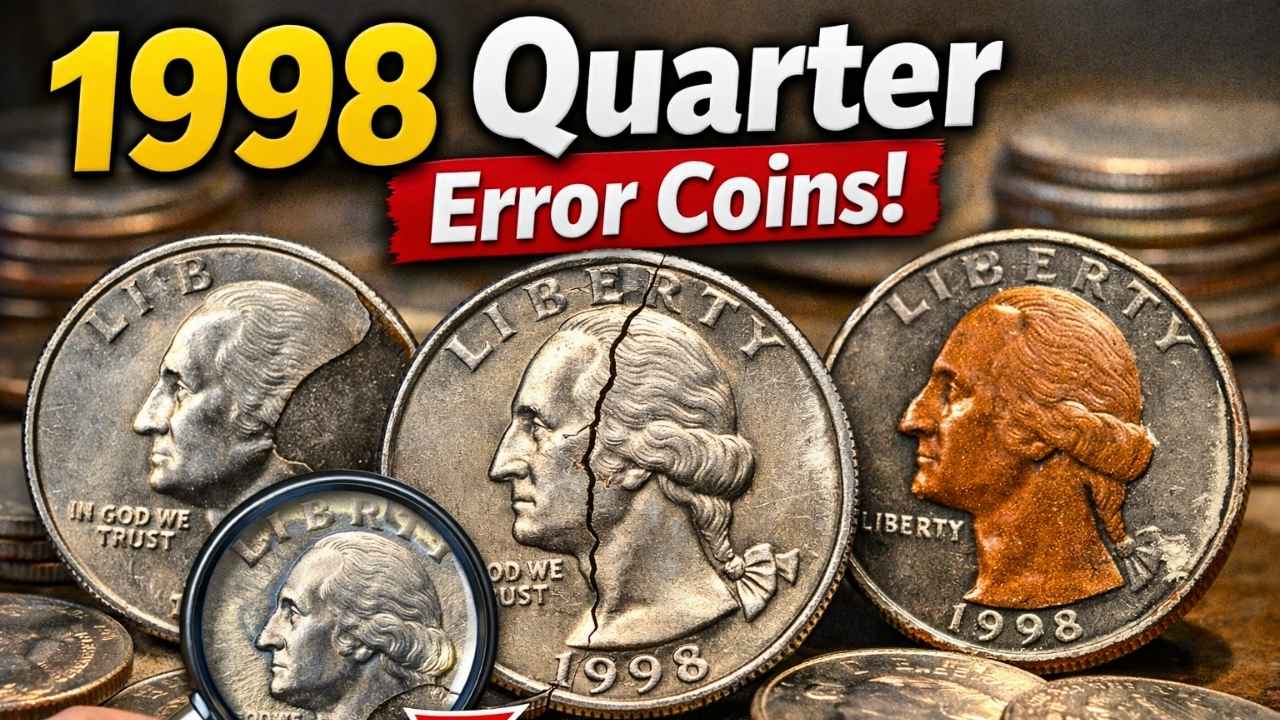
1998 Quarter Error Coins: The Washington Quarter has been a staple of American coinage since 1932, but certain years stand out for collectors due to unusual mint errors and varieties. The 1998 quarter is one such issue that has captured the attention of numismatists. While most examples are common and worth only face value, rare error coins from this year can be worth far more. Understanding how to identify these errors is essential for collectors who want to spot valuable strikes.
The Standard 1998 Quarter
The 1998 Washington Quarter features the familiar portrait of George Washington on the obverse and the heraldic eagle on the reverse. It was struck in large numbers at the Philadelphia and Denver Mints, with proof issues produced in San Francisco. Most coins from this year are ordinary circulation strikes, but a small number exhibit mint errors that make them highly collectible.

Off-Center Strikes
One of the most common errors found in 1998 quarters is the off-center strike. This occurs when the coin blank is not properly aligned during striking, resulting in a design that is shifted to one side. Minor off-center strikes may only add modest value, but dramatic examples where a large portion of the design is missing can sell for significant premiums. Collectors especially prize coins where the date remains visible despite the misalignment.
Double Strikes
Double strikes happen when a coin is struck more than once by the dies, creating overlapping images. On 1998 quarters, this error can produce fascinating distortions of Washington’s portrait or the eagle on the reverse. Dramatic double strikes are rare and can command strong prices, while minor examples are still collectible curiosities.

Clipped Planchets
A clipped planchet occurs when the coin blank is improperly cut, leaving a curved or straight clip on the edge of the coin. 1998 quarters with clipped planchets are relatively scarce and attract collector interest. Values depend on the size and location of the clip, with larger and more dramatic clips being more valuable. Coins with both a clip and clear design details are especially desirable.
Broadstrikes
Broadstrikes occur when a coin is struck without the retaining collar, causing the design to spread outward and the coin to appear larger than normal. 1998 quarters with broadstrikes are unusual and visually striking. Collectors enjoy these errors for their distinctive appearance, and values vary depending on condition and the extent of the broadstrike.
Die Cracks and Cuds
Die cracks and cuds are errors caused by damage to the dies used to strike coins. A die crack appears as a raised line on the coin, while a cud is a raised blob where part of the die has broken away. 1998 quarters with dramatic die cracks or large cuds are popular among error collectors. While minor cracks may add little value, major cuds can make a coin worth several times its face value.
Wrong Planchet Errors
Occasionally, a coin is struck on the wrong planchet, meaning the blank intended for another denomination is used. 1998 quarters struck on nickel or dime planchets are extremely rare and highly valuable. These coins are often lighter or smaller than normal quarters, making them easy to spot. Wrong planchet errors can sell for hundreds or even thousands of dollars depending on rarity and condition.
Proof Coin Errors
Proof coins from the San Francisco Mint are struck with polished dies and planchets, resulting in exceptional detail and finish. While most proof coins are flawless, some 1998 proof quarters exhibit errors such as double dies or striking anomalies. These coins are rare and can command strong premiums, especially when certified by professional grading services.
Collecting Strategies
Collectors approach 1998 quarter errors in different ways. Some focus exclusively on dramatic mint errors, building specialized collections of off-center strikes, double strikes, and wrong planchets. Others enjoy keeping minor errors as curiosities. Regardless of approach, knowledge is essential. Understanding the difference between genuine mint errors and post-mint damage ensures that collectors make informed decisions.
Market Trends
The market for error coins has grown steadily over the past two decades. Online marketplaces and auction platforms have made it easier for collectors to buy and sell these coins, expanding the reach of error collecting. Dramatic errors continue to command strong prices, while minor errors remain affordable entry points for beginners. As interest in numismatics grows, 1998 quarter errors are likely to remain popular.
Conclusion
The 1998 quarter may seem ordinary at first glance, but rare error coins from this year can be worth far more than face value. From off-center strikes to wrong planchet errors, these coins capture the imagination of collectors and highlight the unpredictability of coin production. For those who take the time to examine their change carefully, spotting a valuable 1998 quarter error could be both exciting and rewarding. Collectors who understand these errors are well positioned to appreciate their rarity and secure them as prized additions to their collections.