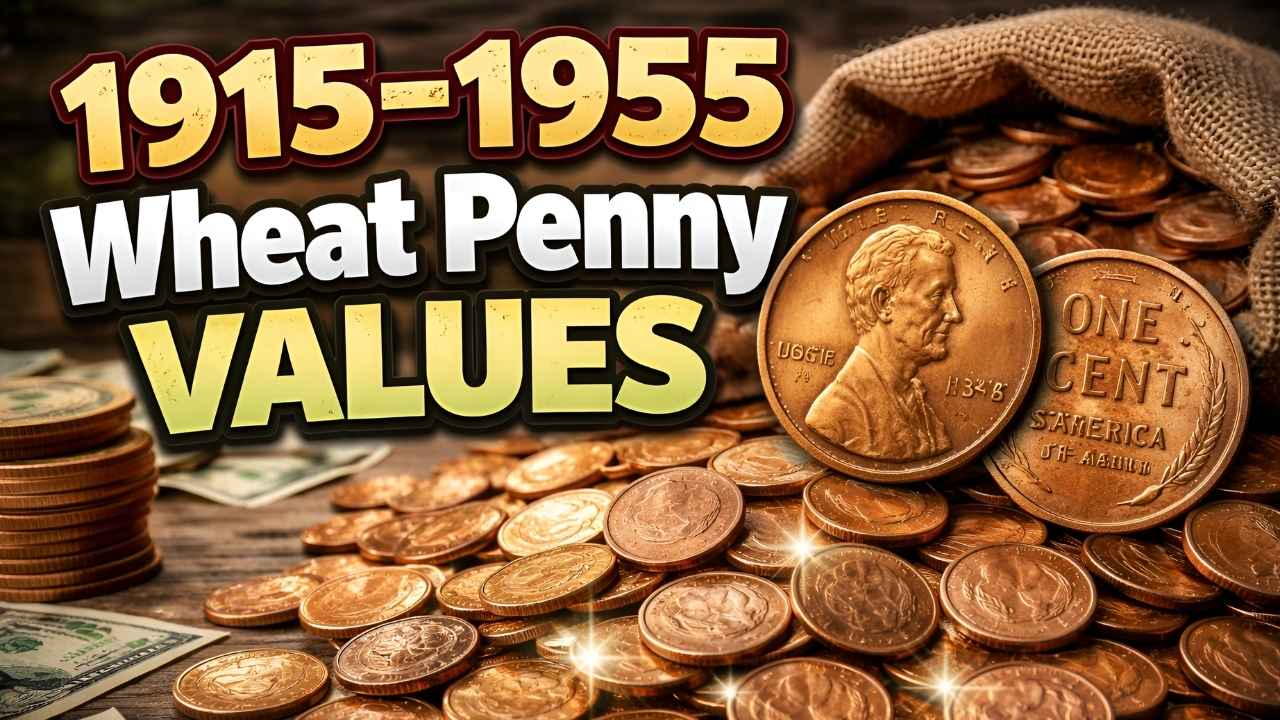
1915–1955 Wheat Penny Values: The Lincoln Wheat Penny, minted from 1909 to 1958, is one of the most iconic coins in American history. Its design features Abraham Lincoln on the obverse and two wheat stalks on the reverse, symbolizing prosperity. Collectors are particularly interested in the years between 1915 and 1955 because these decades produced some of the rarest and most valuable pennies. While many of these coins are common in circulation, certain mint marks, low mintage numbers, and unique errors make specific issues worth far more than their face value.
Historical Context
During the early 20th century, the United States Mint produced billions of pennies to meet the needs of a growing economy. However, not all pennies were created equal. Some years saw limited production due to wartime shortages, while others produced coins with minting errors that later became prized collectibles. The period from 1915 to 1955 includes several key dates that are now considered cornerstones of any serious penny collection.

1915 Wheat Penny
The 1915 Wheat Penny is relatively common, but its value increases significantly in higher grades. Coins minted in Denver and San Francisco are scarcer than those from Philadelphia. A well-preserved 1915 penny can fetch several dollars, while uncirculated examples may be worth much more.
1922 No D Wheat Penny
One of the most famous rarities in the Wheat Penny series is the 1922 No D penny. Produced in Denver, this coin is unique because some dies failed to strike the mint mark. As a result, collectors prize the 1922 penny without the D mint mark. Depending on condition, this coin can be worth hundreds or even thousands.

1931 S Wheat Penny
The 1931 S Wheat Penny is another key date. With a mintage of just under one million, it is one of the lowest production runs in the series. Collectors value this coin highly, especially in uncirculated condition. Prices often reach into the hundreds, making it a sought-after piece for serious numismatists.
1943 Steel Wheat Penny
The 1943 Steel Penny is a fascinating coin produced during World War II. Due to copper shortages, the Mint struck pennies in steel coated with zinc. While these coins are common, they are historically significant and popular among collectors. However, rare 1943 copper pennies exist due to minting errors, and these can sell for tens of thousands.
1944 Steel Wheat Penny
In 1944, the Mint returned to copper, but a few steel planchets were mistakenly used. The 1944 Steel Penny is one of the rarest coins in American history. Only a handful are known to exist, and they have sold for over $100,000 at auction. This coin is considered a legendary rarity.
1955 Double Die Wheat Penny
The 1955 Double Die Wheat Penny is perhaps the most famous error coin in the series. The doubling effect on the date and lettering is easily visible to the naked eye, making it one of the most dramatic minting errors ever produced. Collectors pay thousands for well-preserved examples, and even worn coins are worth far more than face value.
Other Notable Dates
Several other years between 1915 and 1955 produced pennies of interest. The 1917 Double Die Obverse, the 1926 S, and the 1936 Double Die Obverse are all valuable coins. Each of these issues demonstrates how minting errors and low production numbers can create lasting demand among collectors.
Price Chart Overview
Values for Wheat Pennies vary widely depending on condition, rarity, and demand. Common dates from 1915 to 1955 may be worth only a few cents in circulated condition, but uncirculated examples can reach several dollars. Key dates like the 1922 No D, 1931 S, and 1955 Double Die often sell for hundreds or thousands. Rare errors such as the 1943 copper and 1944 steel pennies are worth tens of thousands or more.

Factors Affecting Value
Several factors influence the value of Wheat Pennies. Condition is paramount, with uncirculated coins commanding the highest prices. Mint marks also play a crucial role, as coins from Denver and San Francisco often had lower mintages than those from Philadelphia. Errors and varieties add another layer of rarity, making certain coins far more valuable than their counterparts.
Collecting Wheat Pennies
For collectors, Wheat Pennies offer an accessible entry point into numismatics. Many coins from this era are affordable, allowing beginners to build collections without significant expense. At the same time, rare varieties provide opportunities for advanced collectors to pursue high-value treasures. Building a complete set from 1915 to 1955 is a rewarding challenge that combines history, artistry, and investment potential.
Investment Potential
Wheat Pennies are not only collectibles but also potential investments. Their value has steadily increased over time, especially for rare varieties. Coins like the 1955 Double Die and 1944 Steel Penny have proven to be excellent long-term investments. While coin collecting should primarily be a hobby, the financial rewards can be significant for those who acquire rare and high-grade examples.
Conclusion
The years 1915 to 1955 produced some of the most fascinating and valuable Wheat Pennies in American history. From common coins that serve as entry points for new collectors to legendary rarities worth thousands, this era offers something for everyone. Understanding the rarity and value of these coins helps collectors appreciate their historical significance and financial potential. Whether you are a beginner or an experienced numismatist, Wheat Pennies from this period remain a cornerstone of coin collecting and a testament to the enduring appeal of America’s smallest denomination.