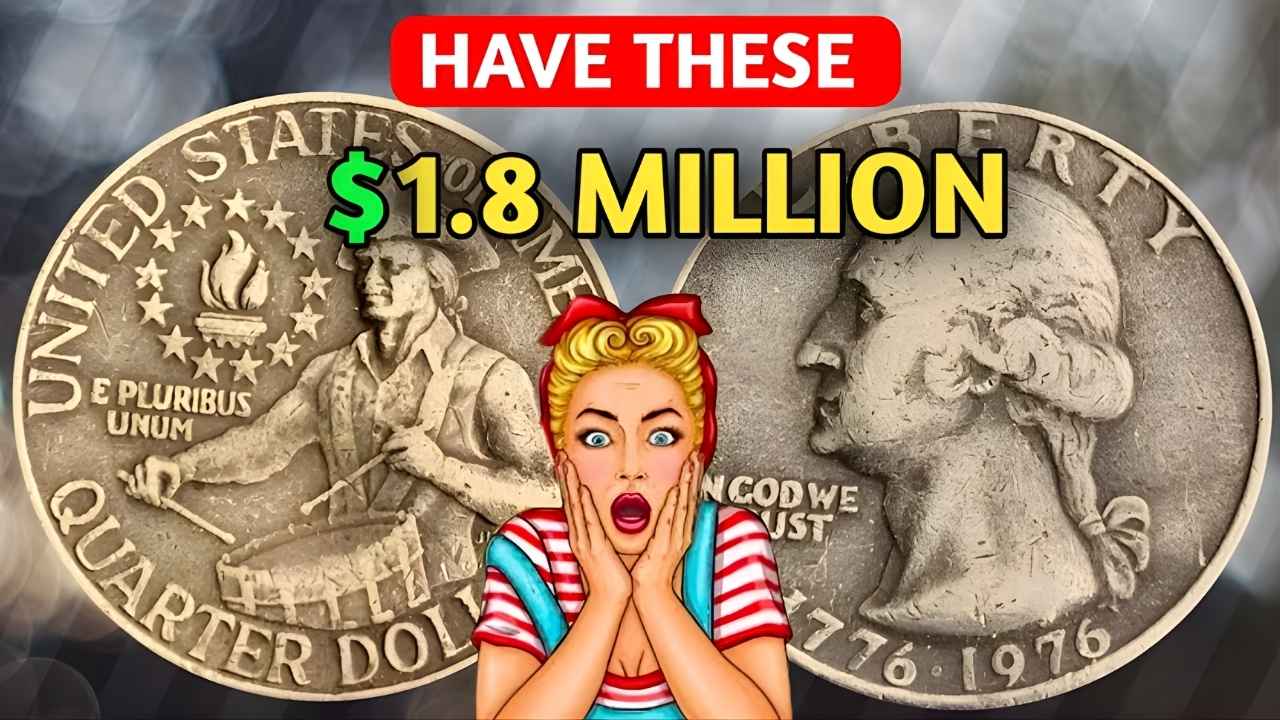
1776–1976 Bicentennial Quarters Worth Thousands: In 1976 the United States celebrated its 200th anniversary of independence. To mark this historic occasion the U.S. Mint released a special commemorative quarter. Instead of the traditional eagle design on the reverse the Bicentennial quarter featured a colonial drummer boy created by artist Jack L. Ahr. The obverse still carried George Washington’s portrait but the date was shown as 1776 1976. This coin was not a limited edition in the strictest sense. More than 1.6 billion Bicentennial quarters were produced across Philadelphia Denver and San Francisco. They were released into circulation and became one of the most widely recognized commemorative coins in American history. Yet despite the massive production certain varieties and conditions have made some of these coins worth far more than their face value.
Why Most Bicentennial Quarters Are Common
Because of the enormous mintage most Bicentennial quarters are worth only 25 cents today. Millions of Americans tucked them away in jars and boxes thinking they might become rare treasures. As a result circulated examples are abundant. However coin collecting is not just about how many coins exist. Condition rarity and minting errors play a huge role in determining value. A coin that looks ordinary to the casual eye may be worth hundreds or even thousands if it has the right characteristics.
Silver Bicentennial Quarters
One of the most valuable categories is the silver Bicentennial quarter. The San Francisco Mint produced special 40 percent silver versions for collectors. These were sold in proof and uncirculated sets. While a typical silver Bicentennial quarter might be worth a few dollars today pristine examples graded by professional services can command much higher prices. A flawless silver proof with deep cameo contrast can sell for hundreds. Rare varieties with unusual toning or exceptional strike quality can reach into the thousands.
Error Coins That Bring Big Money
Error coins are another source of high value. Mistakes during minting are rare and collectors love them. Bicentennial quarters with double strikes off center strikes or missing elements can be worth significant sums. For example a Bicentennial quarter struck on the wrong planchet such as a dime blank can fetch thousands at auction. Similarly coins with dramatic die cracks or misaligned dies are prized by specialists. These errors transform an otherwise common coin into a rare collectible.
Mint Marks and Their Importance
Mint marks also matter. Bicentennial quarters were struck at three mints. Philadelphia coins carried no mint mark Denver coins carried a D and San Francisco coins carried an S. The San Francisco issues included both clad proofs and silver proofs. Collectors often seek out high grade Denver and Philadelphia coins because they were intended for circulation and are harder to find in pristine condition. San Francisco proofs while more common among collectors can still be valuable if perfectly preserved.
Grading and Condition
Grading is the process of evaluating a coin’s condition. A Bicentennial quarter in worn condition may only be worth face value but one graded Mint State 67 or higher can be worth hundreds. Proof coins with perfect surfaces and strong contrast between frosted devices and mirrored fields are especially valuable. Professional grading services provide certification that gives buyers confidence. Coins that have been graded and encapsulated often sell for much higher prices than raw coins.
Record Breaking Sales
Over the years certain Bicentennial quarters have sold for astonishing amounts. High grade silver proofs and rare error coins have crossed the thousand dollar mark at auction. Some examples in near perfect condition have even approached five figure prices. These record sales are not the norm but they demonstrate the potential hidden in this commemorative issue. For collectors the thrill lies in searching through rolls and collections to find that one extraordinary coin.
How to Spot a Valuable Bicentennial Quarter
If you want to check your own coins start by looking for mint marks. An S indicates a proof coin which may be silver. Weighing the coin can confirm whether it is silver since silver quarters are heavier than clad ones. Next examine the condition. Coins with sharp details no wear and bright luster are worth more. If you suspect you have a high grade coin consider sending it to a professional grading service. Finally look for errors. Off center strikes double strikes and unusual planchets are the most valuable. Even minor errors can add significant value.

The Collector’s Perspective
For many collectors the Bicentennial quarter is more than just a potential source of profit. It represents a piece of American history. The drummer boy design is iconic and the dual date reminds us of the nation’s journey from 1776 to 1976. Holding one of these coins is like holding a small piece of the Bicentennial celebration itself. Whether worth 25 cents or thousands of dollars the coin carries meaning beyond its monetary value.
Building a Collection
If you are interested in collecting Bicentennial quarters start with circulation finds. Many people still have them tucked away and rolls can be purchased from banks or coin dealers. From there you can expand into proof sets and silver issues. Error coins are harder to find but they are the crown jewels of any collection. Attending coin shows auctions and online marketplaces can help you discover rare varieties.
Final Thoughts
The 1776 1976 Bicentennial quarter is one of the most beloved commemorative coins in American history. While most examples are common certain silver proofs high grade coins and rare errors can be worth thousands. For collectors the value lies not only in the potential profit but also in the history and artistry of the coin. Whether you are searching through pocket change or bidding at auction the Bicentennial quarter offers a fascinating journey into America’s past and the world of numismatics.